Spring Garden Prep Checklist for NYC Outdoor Spaces
/Spring in New York City arrives fast once it gets going. One week it's gray and cold, the next the cherry blossoms are out in Prospect Park and everyone is suddenly back outside. If you want your outdoor space to be ready when that moment comes — not still thawing out two weeks later — the prep work has to happen now.
Whether you're working with a Brooklyn backyard, a Manhattan terrace, or a rooftop garden, here's a practical checklist for getting your outdoor space in shape for spring. Some of these you can handle yourself; others are worth bringing in a professional team to do right.
Start With a Full Assessment
Before you plant, clean, or rearrange anything, walk your space with fresh eyes. Winter in NYC is hard on outdoor areas — freeze-thaw cycles, salt air, and heavy use take a toll. Look for:
Cracked or heaved pavers, stone, or concrete
Damaged or deteriorated planters (cracks, delamination, rust on metal)
Dead or frost-burned plants that need to be removed
Drainage areas that may have shifted or become blocked
Furniture that needs cleaning, repair, or replacement
Fencing, trellises, or privacy screens that shifted over the winter
Document what you find. This list becomes your spring to-do list and, if you're working with a landscape team, your project brief. If your hardscaping took a hit over winter, spring is the right moment to address it before the season gets away from you.
Clean and Clear
Once you know what you're working with, start with a thorough cleanup:
Remove dead plant material, fallen leaves, and any debris that accumulated over winter
Power wash or scrub hardscaped surfaces — pavers, decking, stone — to remove winter grime, algae, and salt residue
Wipe down and inspect all outdoor furniture; replace cushion covers or store damaged cushions
Clear and test any drainage channels or catch basins
Remove winter protective covers from plants, container gardens, and irrigation components
Assess Your Plants: What Survived, What Didn't
Not everything makes it through a New York City winter, and that's okay. Spring is a natural reset point for planting. Here's how to approach the post-winter plant audit:
Check perennials for new growth. Many perennials that look dead in March will push new growth by mid-April. Scratch a stem gently with your fingernail — green just under the surface means it's alive.
Cut back dead growth on ornamental grasses, salvias, and other perennials. Wait until you see new growth at the base before cutting, so you know exactly where to cut to.
Remove any annuals that didn't overwinter. Most won't have — but their root systems loosen the soil and make replanting easier.
Inspect evergreen shrubs for winter burn. Browning on one side is typically wind or sun damage. Prune the affected areas once new growth begins.
For rooftop and terrace gardens, container plants are especially vulnerable to freeze damage. Check the root balls of any overwintered containers — if the roots are mushy or the plant shows no signs of life by late April, it's time to replace it.
Soil and Planting Bed Prep
Healthy soil is the foundation of everything. NYC gardens — especially container gardens and raised beds — benefit enormously from a spring soil refresh:
Add a 2-3 inch layer of compost to in-ground planting beds and work it into the top few inches of soil
For container gardens, replace the top third of the potting mix with fresh mix — or replace entirely if the soil is compacted, depleted, or shows signs of fungal issues
Test soil pH if you've been battling plants that seem chronically underperforming — many NYC soils and container mixes drift acidic over time
Apply a slow-release granular fertilizer to beds and containers as new growth begins
Check Your Irrigation System
If you have a drip irrigation system — and if you don't, spring is a great time to install one — now is the time to get it running before the dry season starts:
Turn on the system and walk every zone, checking for broken emitters, cracked lines, or clogged heads
Flush drip lines to clear any debris that settled over winter
Check timers and controllers — replace batteries and update seasonal schedules
Adjust emitter placement if containers or plant locations shifted over the fall/winter
A functioning irrigation system is especially critical for rooftop and terrace gardens, where hand-watering is difficult and plants dry out faster than in sheltered ground-level gardens.
Plan Your Spring Planting
Now the fun part. Once cleanup, repairs, and soil prep are done, it's time to plan what goes in. A few NYC-specific timing notes:
Early April: Cool-season plants go in — pansies, snapdragons, sweet alyssum, ornamental kale, and early herbs like parsley and cilantro. These handle the occasional cold snap that NYC gets through mid-April.
Late April / Early May: Perennials, flowering shrubs, and hardy grasses can be installed once nighttime temps stay reliably above 40°F.
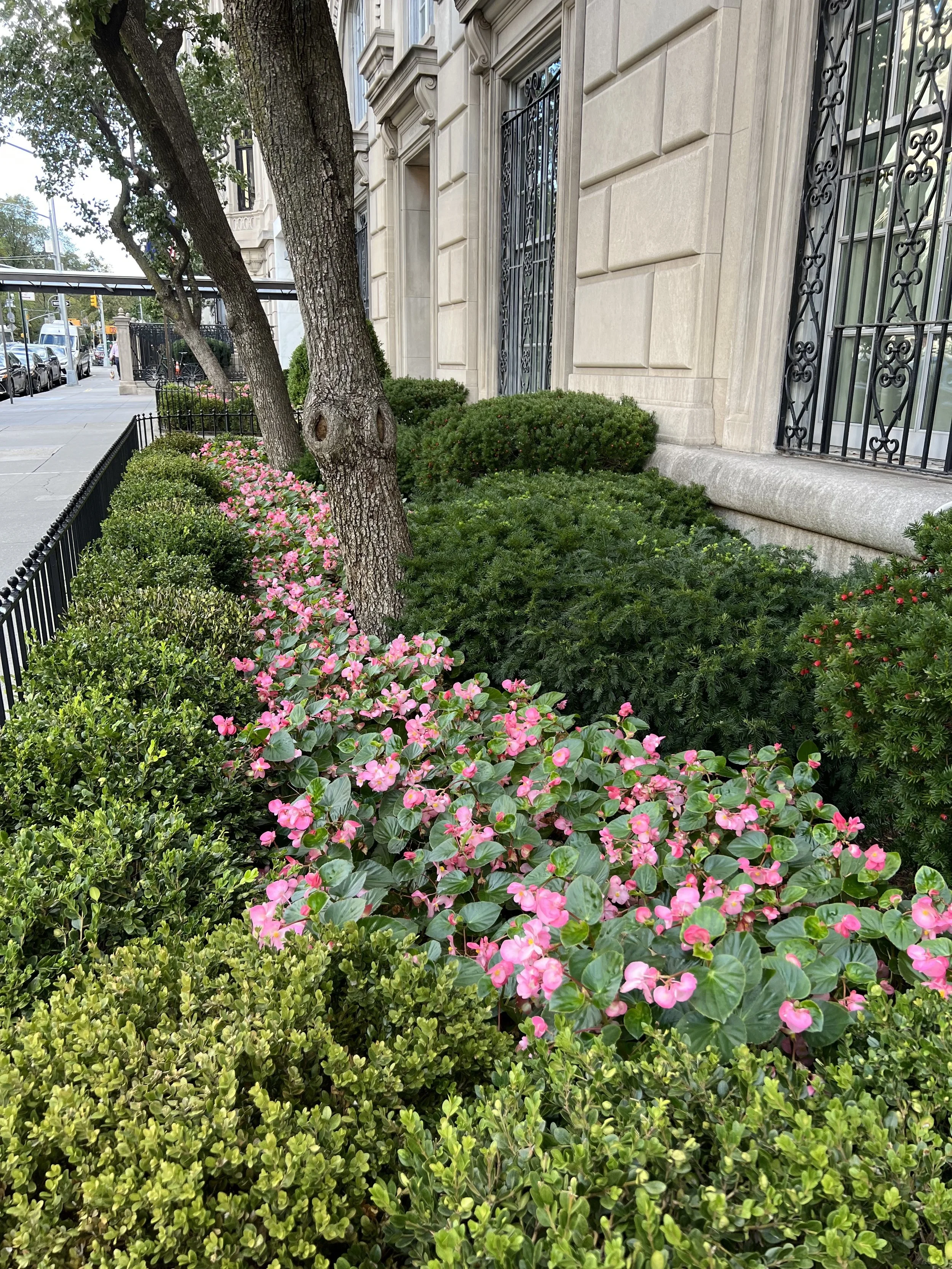
After Mother's Day (mid-May): This is the traditional safe window for warm-season annuals and tropical plants — impatiens, begonias, lantana, mandevilla — that don't tolerate frost.
For planting guidance specific to NYC's climate and conditions, our post on how to design a garden is a helpful starting point — especially if you're making bigger decisions about layout and plant selection for the season.
Rooftop-Specific Checklist Items
Rooftop gardens have a few additional prep steps worth calling out separately. If you manage a rooftop or terrace garden in NYC, add these to your spring list:
Inspect roof membrane around planter bases and drain areas for any signs of winter damage or wear
Check that drainage mats and root barriers are intact under planters and raised beds
Assess wind screening — fabric or woven screens can deteriorate over winter and may need replacing before plants go in
Confirm structural stability of any pergola, trellis, or overhead structure after wind and ice exposure
Review load distribution if you're adding new containers or furniture this season
Add Seasonal Color Fast
One of the most effective ways to make an outdoor space feel alive again after winter is with immediate seasonal color — containers of tulips, daffodils, or flowering herbs placed at entrances, seating areas, and focal points. This is exactly what our seasonal planting services are designed for: a fast, professional refresh that makes your space look intentional and cared-for while you work on the bigger-picture prep.
When to Call in a Professional Team
Some spring prep tasks are genuinely DIY-friendly. Others are worth leaving to professionals — particularly in NYC, where mistakes can be costly or affect neighbors and building systems.
Consider bringing in a team for:
Structural inspections after major weather events
Irrigation installation or system troubleshooting
Large-scale replanting, hardscape repair, or drainage work
Rooftop projects of any scope, where waterproofing and load considerations are involved
NY Horticulture Group provides garden maintenance and spring prep services across Manhattan and Brooklyn. Whether you need a full spring refresh or just a professional eye on what winter left behind, we're happy to help.