
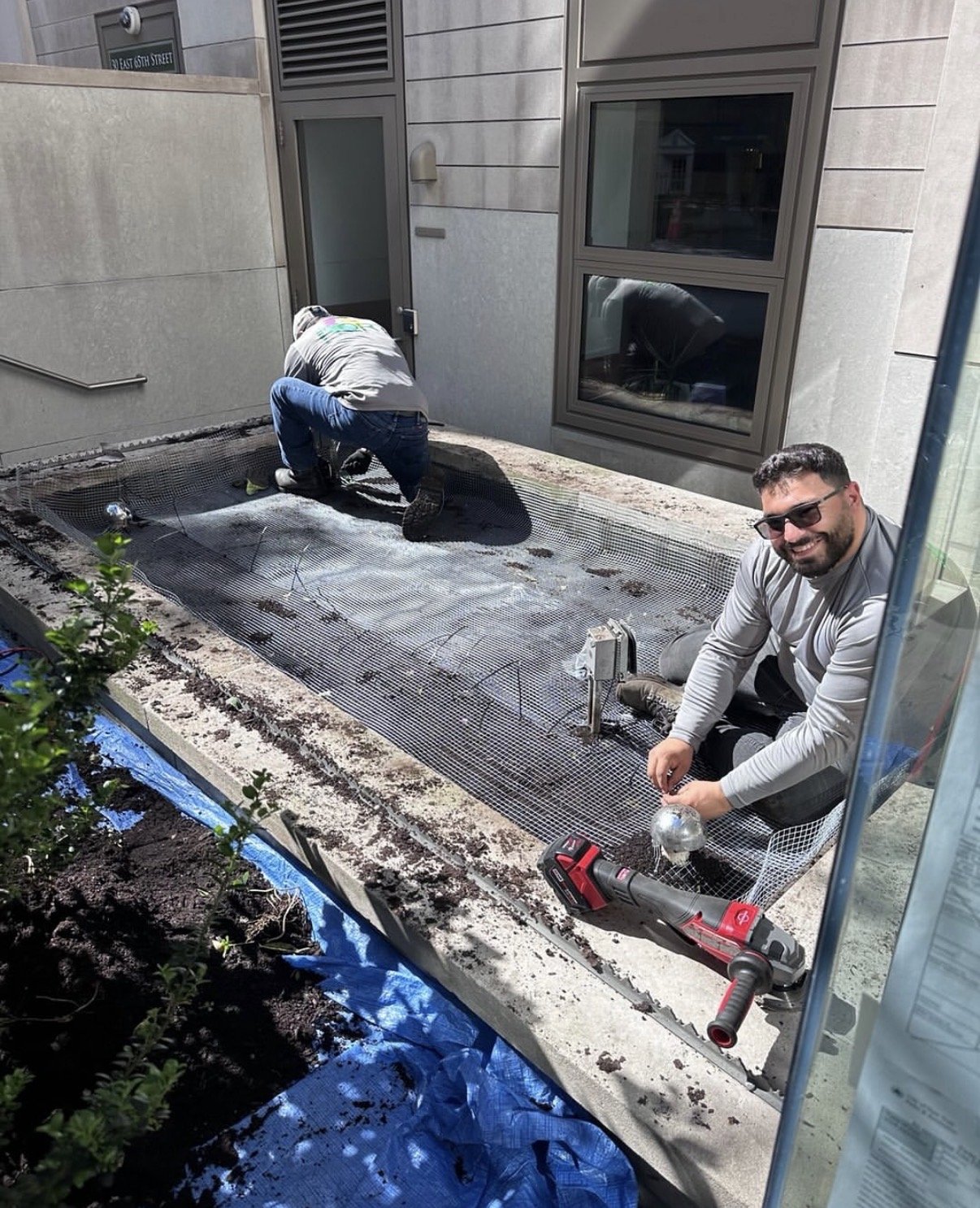
Rodent Wire Mesh Installation for NYC Landscapes
Rats don't just visit NYC gardens — they burrow beneath them. Tree pits, planting beds, turf, planters, and patios all provide the loose soil rodents need to tunnel, nest, and undermine your landscape.
You've invested serious money in your outdoor space. Our rodent wire mesh installations protect that investment before the first shovel of soil goes in — a hidden underground rodent exclusion barrier, built directly into the landscape itself.
What Is Rodent Mesh — and Why Your Landscaping Needs It
Rodent mesh is a heavy-duty galvanized wire mesh — sometimes called wire cloth — installed beneath soil, around planting beds, and along the vulnerable edges of a landscape where rodents dig, burrow, and nest. It's rodent exclusion in the truest sense: unlike traps or bait, which deal with rodents after they've arrived, an exclusion barrier keeps them from ever establishing in your garden.
In NYC, that matters more than almost anywhere. Rats burrow into the planting beds of brownstone gardens, tunnel beneath the pavers of commercial courtyards, and nest in the undisturbed soil of rooftop terrace planters. Once they're established, they damage root systems, undermine hardscaping, and turn a space you spent tens of thousands of dollars building into somewhere no one wants to sit.
A landscape rodent exclusion barrier solves the problem structurally — quietly, invisibly, and without ongoing chemicals or maintenance. Some suppliers market these products as a rodent guard or rodent block; whatever the name, the principle is the same: a physical barrier rodents cannot chew or dig through.
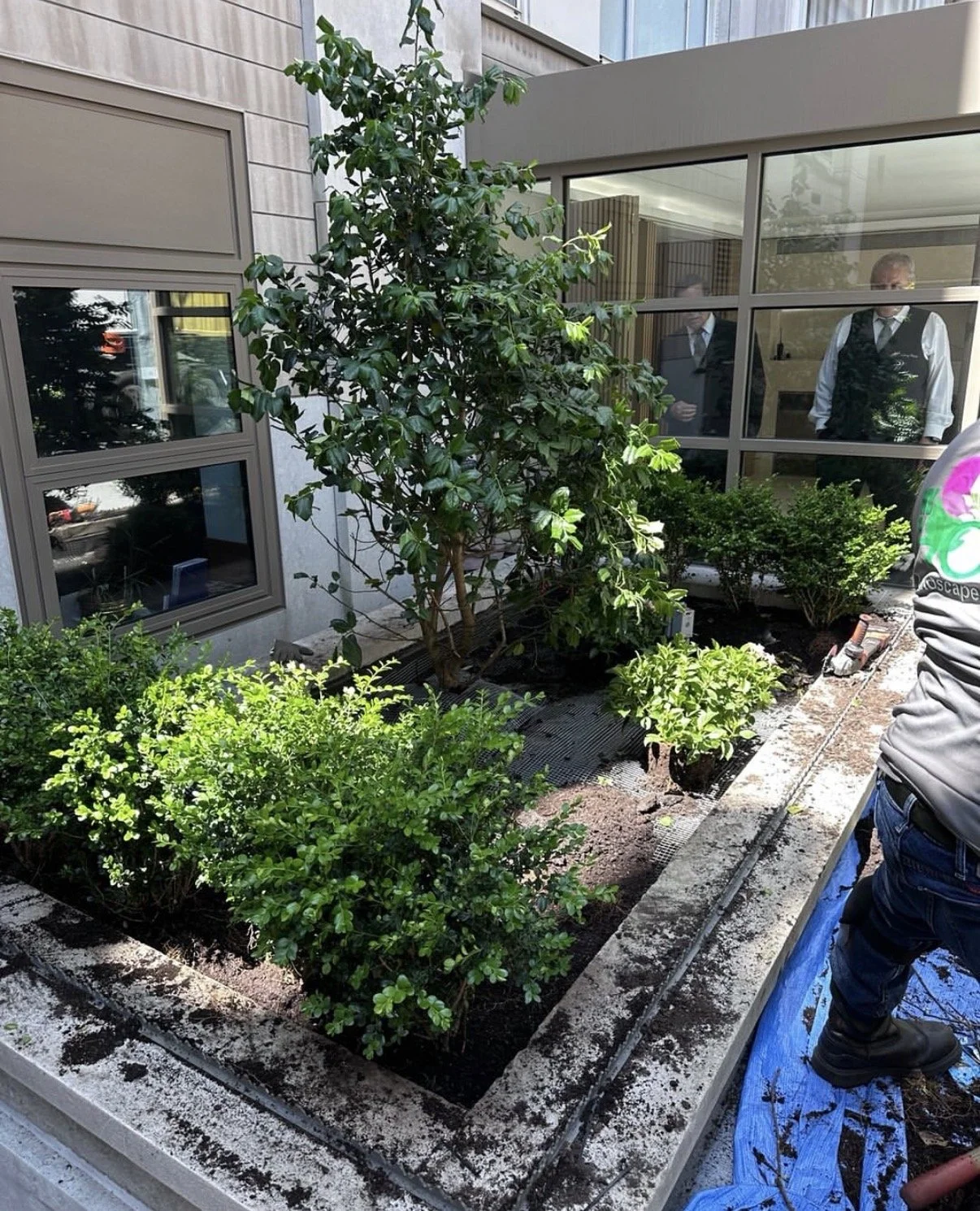
Where We Install Rat Wire Mesh in NYC Landscapes
Every installation is tailored to the design of your space. Common applications across Manhattan and Brooklyn include:
Brownstone & townhouse gardens. Rear gardens with mature soil are prime burrowing territory. Mesh lines beds and perimeter edges during renovation, sealing the garden without changing how it looks.
Raised beds & planting areas. Mesh lines the base and sides of beds before soil goes in, closing off the burrowing route rats use most.
Tree pits. NYC tree pits are notorious rodent real estate. We integrate mesh below and around the pit while protecting root health.
Rooftop terraces & planters. Terrace planters and container gardens get lined during planting or replanting — keeping nesting rodents out of the one place they're hardest to remove from.
Beneath artificial grass. Turf installations sit on a soft base layer rodents love to tunnel through. An underground rodent exclusion layer beneath the base keeps the surface smooth and intact.
Hardscape edges & commercial courtyards. Patios, walkways, and courtyard plantings are only as secure as their perimeter. Mesh along the edges stops the burrowing that would otherwise undermine the work.
Fence lines & garden perimeters. A buried mesh skirt along fences and property edges closes off entry routes into the garden itself.
Rodent Proofing for Landscaping — Not Pest Control
This is an important distinction: we are landscapers, not exterminators. We don't provide residential pest control, and we don't handle infestations inside buildings.
What we do is build rodent exclusion into the landscape itself — during garden construction, backyard renovations, turf installations, and replanting projects. If your space is being designed, built, or refreshed by our team, rodent proofing can be integrated seamlessly into the work, protecting your investment from day one.
If you have an active infestation indoors, a licensed pest management professional is the right first call. Once the population is handled, we make sure your landscape never becomes the nesting ground again.
Our Process
Site assessment. We walk the space, identify burrow-prone zones — beds, tree pits, planters, turf areas, perimeter lines — and map where the exclusion barrier is needed.
Design integration. Mesh specifications are folded into your landscape or renovation plan, accounting for drainage, irrigation, and root growth.
Installation. Barriers go in during construction or planting: beneath soil, lining beds and planters, under turf base layers, and along hardscape edges.
Finish & conceal. Everything is buried, planted over, and invisible. The garden looks exactly as designed — it just has armor underneath.
Why Install Rodent Mesh During Construction?
Because the barrier lives beneath soil and hardscaping, the most cost-effective time to install rodent exclusion mesh is while everything is already open — during new landscape construction, a backyard renovation, a turf installation, or replanting. The excavation is happening anyway. Adding mesh at that stage costs a fraction of retrofitting it later, when beds would need to be emptied, turf lifted, and hardscape edges re-dug.
That's the real advantage of having your landscaper handle rodent proofing rather than treating it as an afterthought: we fold the exclusion barrier into work that's already scheduled.
If you're planning any of these projects, this is the moment to build the barrier in:
A new garden or landscape design project
A townhouse backyard renovation
New hardscape — patios, walkways, walls
Seasonal replanting of beds and planters

Why Galvanized Wire Mesh?
Not all mesh is equal, and most of what's sold at hardware stores isn't built for this job. We install professional-grade galvanized wire cloth engineered specifically for rodent exclusion:
Gnaw-proof gauge. Rats can chew through plastic, foam, and light screening. Galvanized steel wire cloth stops them.
Tight weave. Openings sized so even juvenile mice can't pass — standard window screen or chicken wire can't do that.
Rust-resistant. Galvanized coating stands up to soil contact, irrigation, and NYC winters for years underground.
Root-friendly. Water, nutrients, and roots move through freely. Your plants never know it's there.
It's the same class of material used in commercial rodent exclusion — installed with a landscaper's care for drainage, root systems, and the finished look of the space.
Build a Garden Rats Can't Move Into
Planning a garden build, backyard renovation, or turf installation? This is the moment to build the barrier in — while everything is already open. Talk to our team about adding rodent wire mesh to your project.
-
No. The mesh is fully permeable to water, nutrients, and fine roots. For trees and large shrubs, we spec the installation so structural roots have room to grow.
-
Yes — most cost-effectively during a renovation, replanting, or turf project, when beds and base layers are already open. Retrofitting a finished garden is possible but involves meaningfully more labor, which is why we recommend building it into planned work.
-
Those names — rodent guard, rodent stopper, rodent block — generally describe the same category: physical exclusion barriers. Ours is a professional-grade galvanized wire cloth system, installed as part of the landscape rather than as a standalone product.
-
No. Chicken wire's openings are large enough for mice and young rats, and the light gauge is chewable. Purpose-made rodent exclusion mesh is heavier steel with a much tighter weave.
-
Galvanized wire cloth is built for years of soil contact. Installed correctly, it's a one-time investment for the life of the landscape.
-
No — we're a landscaping company, and exclusion barriers are the extent of our rodent work. For an active infestation, bring in a licensed pest professional first; we'll handle making the landscape burrow-proof afterward.


