The Best Fall Plants for NYC Terraces and Window Boxes
/Quick Answer: The best fall plants for NYC terraces and window boxes include ornamental kale and cabbage, mums, asters, sedum, ornamental grasses, and pansies, all of which tolerate Manhattan's zone 7b conditions and the first frost that typically arrives around mid-October. Mixing bloom times and textures keeps a container looking full from September through the first hard freeze.
Fall containers get treated as an afterthought more often than any other season, usually a quick swap to mums and done. That's a missed opportunity. Manhattan sits in USDA hardiness zone 7b, the warmest zone in the city, which gives terrace and window box plantings a longer, more interesting fall season than most people take advantage of.
Know Your Frost Timeline
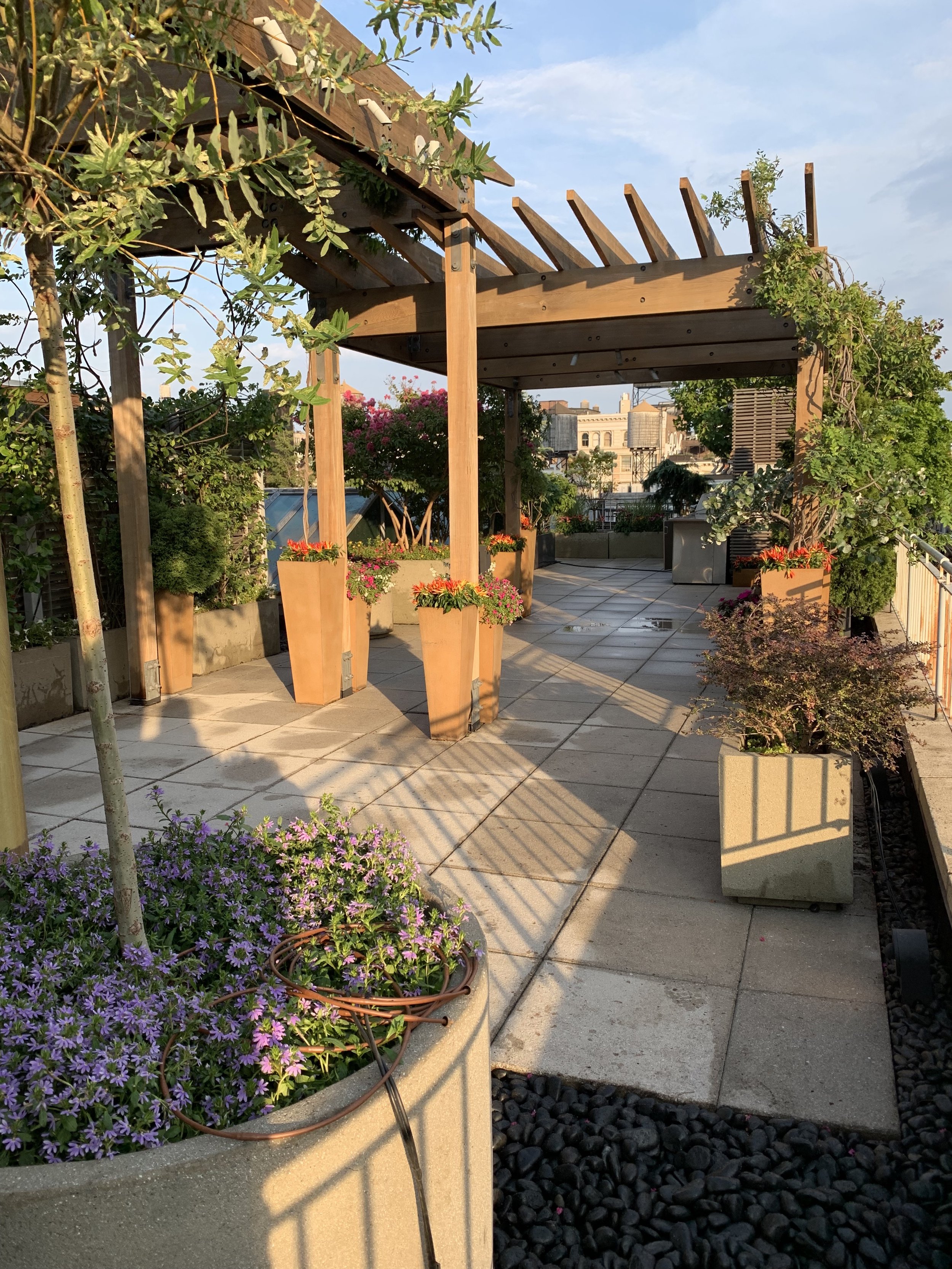
The average first fall frost for the New York area lands around mid-October, though rooftop and terrace microclimates, with their wind exposure and reflected heat from surrounding buildings, can push that timeline earlier or later than street-level gardens. That gives most containers a solid two months of fall display before real cold sets in, plenty of time to justify more than a single mum swap.
Ornamental Kale and Cabbage
These are the workhorses of fall containers for good reason. Their rosette shape and deep purple, pink, and cream coloring actually intensify as temperatures drop, so they look better in late October than they did in September, the opposite of how most flowering plants behave. They hold their structure through light frost and pair well as a textural anchor next to softer blooming plants.
Mums, Done Well
Mums earn their reputation as the default fall plant because they work, but the difference between a forgettable mum display and a good one comes down to variety and placement. Choosing a mix of bloom colors rather than a single uniform block, and staggering bloom times with earlier and later varieties, keeps a container from peaking all at once and then looking spent for the rest of the season.
Asters for Late-Season Color
Asters bloom later than mums and carry color into October when other flowering plants have started to fade, with a star-shaped bloom in purples and pinks that reads as more delicate and less expected than a typical mum arrangement. They're a good choice for anyone who wants a fall container that doesn't look identical to every other building's lobby planters.
Sedum and Ornamental Grasses for Structure
Sedum varieties like Autumn Joy shift from summer green to a deep rust-pink as fall progresses and hold their form well into winter even after blooms fade, giving a container structure long after the showier flowers are gone. Ornamental grasses add movement and height, especially useful on windy rooftops and terraces where a container needs something more architectural than flowers alone can provide.
Pansies for an Early Spring Bridge
Pansies tolerate cold better than most people expect and, planted in fall, will often survive a mild NYC winter to bloom again in very early spring, making them one of the few plants that can bridge two seasons in the same container without a full replant. They're a smart addition if you're not planning a full spring refresh right away.
Building a Mixed Container That Lasts
The most successful fall containers combine a structural element (kale, ornamental grass, or sedum), a color element (mums or asters), and something trailing over the edge for softness. This is the same layering logic we use for spring containers, covered in our NYC spring garden prep checklist, just with a cool-season palette instead.
What Happens After the Fall Display Fades
Once hard frost arrives and even the cold-tolerant fall plants have finished, it's time to think about protecting the rest of the terrace or rooftop for winter, particularly any perennials, shrubs, or trees left in containers year-round. We walk through that process in how to winterize your NYC rooftop garden.