Best Plants for Zone 7 New York Gardens: A Seasonal Guide
/It’s easy to fall in love with a garden in May. The harder part is choosing plants you’ll still enjoy looking at in November.
That’s where a little planning helps. Spring bulbs, summer flowers, colorful fall foliage, and a few well-placed evergreens can keep a New York garden interesting throughout the year. You don’t need a huge property, either. A small backyard or a collection of terrace planters can have its own seasonal rhythm.
If you garden in USDA Hardiness Zone 7, you have plenty of options. Here are some of the best plants to consider, along with practical advice for helping them settle into your particular corner of New York.
First, What Does Zone 7 Actually Mean?
Zone 7 describes places where the average annual coldest temperature falls between 0°F and 10°F. Zone 7a covers the colder half of that range; Zone 7b covers the warmer half.
That’s useful when choosing plants that need to survive winter outdoors. But New York spans several growing zones, so check your address on the USDA Plant Hardiness Zone Map before buying.
Then look at your space. How much direct sun does it get? Does water linger after rain? Is it sheltered between buildings or exposed to wind?
A hydrangea in a shaded backyard and the same hydrangea on a sunny rooftop will need very different care. The zone tells you about winter cold. Your growing conditions help determine whether the plant will be happy there.
A note about containers: Roots get colder in above-ground planters than they do in the earth. For permanent outdoor containers, choosing plants hardy two zones colder—Zone 5 or below for a Zone 7 location—is a useful starting point. You’ll still need suitable containers, drainage, and winter protection. Illinois Extension explains the guideline here.
Spring: Start With Bulbs, Then Build Up
The best spring gardens unfold over several weeks. A few early flowers appear, bulbs take over, and then shrubs and trees fill out the picture.
Daffodils, Tulips, and Alliums
Best for: sunny beds, borders, and seasonal displays.
Daffodils are a dependable choice if you want bulbs that return year after year. Plant them in loose groups, and mix early- and late-flowering varieties to stretch the season.
Tulips offer a wider range of bold colors, though many large-flowered varieties need replacing to keep the display full. Spring-flowering alliums follow with tall stems and rounded flower heads that look especially good rising through lower plants.
Plant these bulbs in fall for spring flowers, and leave their foliage until it yellows naturally. Later-emerging perennials can help hide the fading leaves. Penn State’s bulb guide covers planting and care.
Hellebores
Best for: sheltered, partly shaded beds.
Hellebores are worth planting somewhere you pass every day. Their flowers arrive in late winter or early spring, when even a little color feels welcome.
They prefer well-drained soil and protection from harsh wind. Their foliage adds interest beyond flowering, although damaged leaves may need tidying after winter. More about growing hellebores.
Bleeding Heart
Best for: shady backyards with consistently moist, well-drained soil.
With arching stems and dangling pink or white flowers, old-fashioned bleeding heart brings a softer look to a spring garden.
It often dies back as summer arrives, so give it neighbors that will fill the space. Hostas and ferns work well. If the leaves yellow after flowering, don’t immediately assume something has gone wrong. That summer dormancy is normal.
Azaleas and Rhododendrons
Best for: sheltered gardens with acidic soil.
These familiar spring shrubs can be beautiful in a partly shaded garden, provided the soil suits them. They generally need acidic conditions, good drainage, and reliable moisture.
Check the mature size and hardiness of the variety you’re buying. Some stay compact; others will eventually fill a substantial part of a small backyard. See their growing requirements.
Spring tip: Wait until soil is workable before planting hardy perennials and shrubs. Save tender summer annuals for after the local frost risk has passed.
Summer: Keep the Garden Going Through the Heat
Summer is when plant selection and watering start to matter most, especially above street level. Even drought-tolerant plants need regular attention while they establish.
Coneflowers and Black-Eyed Susans
Best for: sunny borders with good drainage.
These are easy plants to build a summer border around. Coneflowers bring pink, purple, white, and other colors, while black-eyed Susans add warm yellow later in the season.
Plant them in groups for a fuller look, and leave some healthy seed heads standing when flowering ends. Coneflower seed heads can feed birds and give the winter garden a little texture. Read about coneflower care.
When buying black-eyed Susans, check the label: perennial Rudbeckia fulgida and the often shorter-lived Rudbeckia hirta can share the same common name. Penn State explains the distinction.
Hydrangeas
Best for: beds and large containers with dependable moisture.
Hydrangeas give a garden a lush, settled-in feeling. The trick is choosing the right type.
Panicle hydrangeas flower on the current season’s growth and include compact varieties for smaller spaces. Bigleaf hydrangeas, including familiar mophead and lacecap types, may depend on flower buds that formed the previous year.
That difference matters when pruning. Cutting back the wrong type at the wrong time can mean losing a season of flowers. Identify yours before reaching for the pruners. This hydrangea pruning guide can help.
On a terrace, give hydrangeas enough root space and a reliable watering setup. Small pots in hot, windy locations are a difficult match.
Hostas
Best for: shaded and partly shaded gardens.
A shady backyard doesn’t need constant flowers to look good. Hostas offer broad leaves in blue-green, chartreuse, and variegated combinations that keep a planting interesting through summer.
Choose by mature width, and allow room for the clumps to fill out. Watch for slugs and, where relevant, deer. See hosta growing guidance.
Russian Sage and Perennial Salvia
Best for: sunny, well-drained beds and suitable terrace containers.
Russian sage has silvery foliage and airy lavender-blue flowers. Hardy perennial salvias bring more defined flower spikes and fit nicely among grasses and other summer perennials.
Both are useful options for sunny spaces that run dry. Neither wants constantly wet soil, and container-grown plants still need watering. Penn State lists both among heat- and drought-tolerant plants.
Summer tip: Use annuals to fill a few easy-to-reach containers with color. For larger terrace plantings, consider drip irrigation so watering stays manageable.
Fall: Give the Garden a Second Wind
If your garden fades by Labor Day, a few late-season additions can make a big difference. Fall interest comes from flowers, changing leaves, and grasses that catch the afternoon light.
Asters
Best for: sunny beds with room for late-season growth.
New England asters bring pink and purple flowers when many summer perennials are finishing. They also provide food for late-season pollinators.
Some varieties grow tall, so look for compact selections if space is tight. Leave enough room between plants for air to circulate. More about New England asters.
Upright Sedum and Switchgrass
Best for: sunny borders; choose varieties suited to your space.
Upright sedums, such as ‘Autumn Joy,’ have substantial flower heads that deepen in color as the season progresses. They suit well-drained conditions and look good beside finer-textured plants. See Penn State’s drought-tolerant selections.
Switchgrass adds height and movement, with seed heads and foliage that can remain attractive into winter. Check the variety’s mature size before planting; some become much larger than their nursery pots suggest. See switchgrass growing guidance.
Japanese Maple
Best for: sheltered gardens with room for the chosen variety.
A Japanese maple can become the tree you plan the rest of the garden around. Its branching shape, delicate leaves, and fall color make it especially effective near a seating area or window.
Choose carefully: some varieties stay relatively small, while others become sizable trees. Protection from drying winds and harsh exposure helps the foliage look its best. More about Japanese maples.
Oakleaf Hydrangea
Best for: well-drained beds in sun to partial shade.
Oakleaf hydrangea earns its space over several seasons. Summer flowers give way to rich fall foliage, and older stems develop peeling bark.
Look for a compact selection if you have a smaller garden, and allow it enough room to keep its natural shape. It flowers on older wood, so avoid routine hard pruning. See oakleaf hydrangea care.
Fall tip: Mums are great for an immediate container refresh, but a flowering pot bought late in the season isn’t guaranteed to return. For a lasting planting, choose a hardy garden variety and establish it earlier. Iowa State explains why timing matters.
Winter: Keep Something Worth Looking At
Winter is a good test of a planting plan. Once the flowers and most leaves are gone, you notice the shapes, branches, and evergreens.
Start with the areas you see from inside. A well-placed shrub outside a kitchen window can do more for your winter garden than several plants tucked out of sight.
Inkberry Holly
Best for: beds with acidic soil and dependable moisture.
Inkberry provides evergreen foliage with a softer appearance than prickly-leaved hollies. Compact selections can work well where you want a rounded green presence.
Its berries are black, rather than red, and female plants need suitable pollination to produce them. The foliage is usually the main attraction. More about inkberry.
Juniper
Best for: sunny, well-drained locations.
Low-growing junipers can soften a bed edge or spill over the side of a substantial planter. Their green, blue-green, or silvery foliage gives you color even in the quietest months.
Allow for their eventual spread, and avoid spots where water collects. See creeping juniper growing requirements.
Winterberry Holly
Best for: moist, acidic beds.
Winterberry drops its leaves in fall, leaving berries visible along the branches. It’s a lovely option near an evergreen backdrop.
For fruit, you’ll need a female plant and a compatible male winterberry that flowers at the same time. Ask for a matched pair when shopping. Birds and weather affect how long the berries remain. See winterberry planting guidance.
Red-Twig Dogwood
Best for: beds with consistent moisture and room to spread.
Red-twig dogwood’s colorful stems become the attraction after its leaves fall. They stand out beautifully against snow, pale paving, or dark evergreen foliage.
Younger stems generally have the strongest color, so periodically removing some older growth helps keep the display fresh. Choose a compact selection where space is limited. More about red-twig dogwood.
Winter tip: If you want flowers, look into winter-blooming witch hazels. Check the species before buying: common witch hazel flowers in fall, while many hybrid witch hazels flower in late winter.
Putting It Together in Your Garden
You don’t need to buy something from every section. Start with the season your garden is missing.
For a partly shaded backyard, hellebores and bleeding heart can open the year, hostas carry the summer foliage, and oakleaf hydrangea adds flowers and fall color.
For a sunny border, try spring daffodils followed by coneflowers, black-eyed Susans, asters, and upright sedum. A few grasses can connect the planting visually.
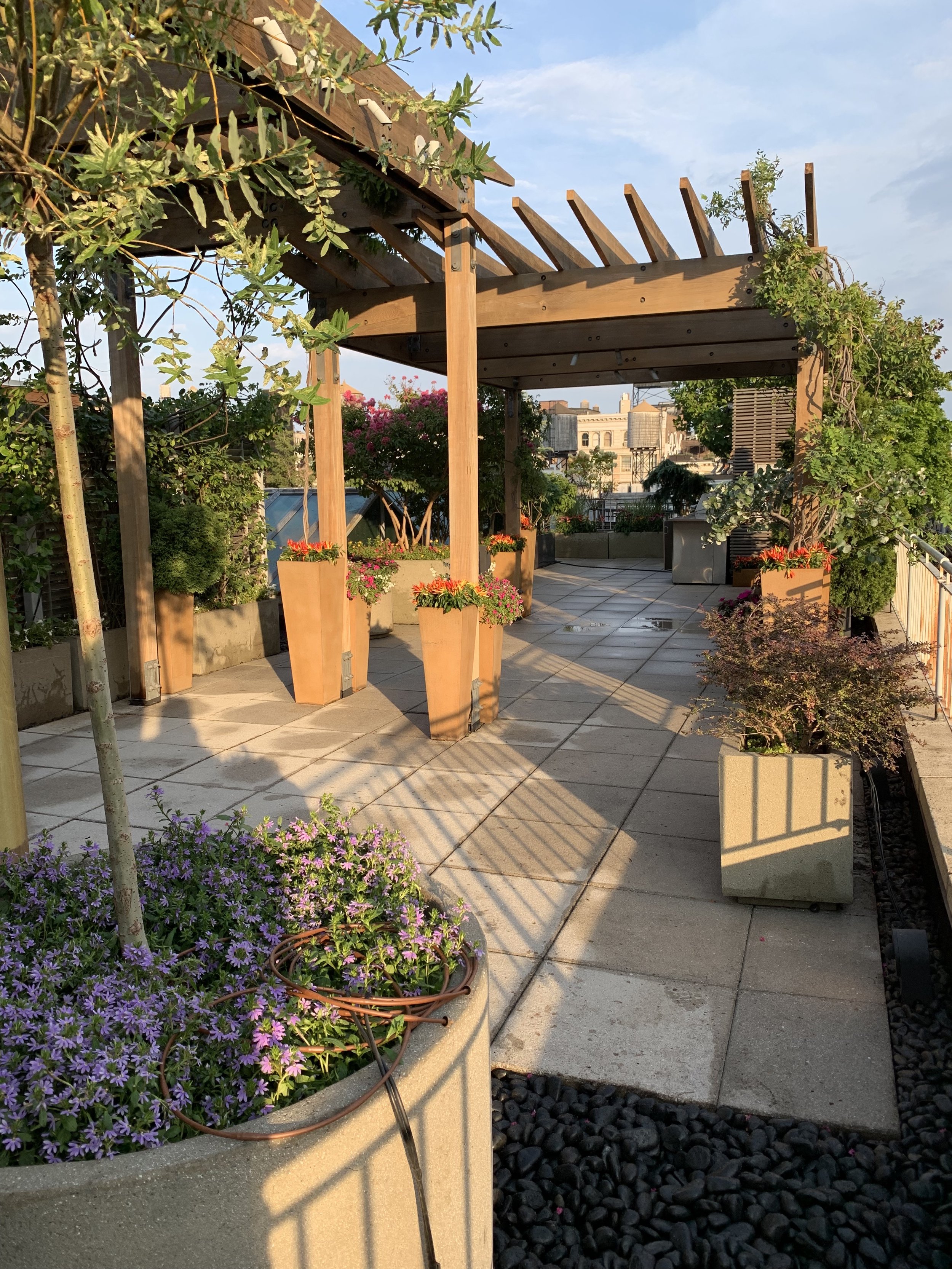
For a terrace, choose permanent plants around the containers, wind exposure, and watering you can provide. Keep a few separate pots for seasonal flowers so refreshing the space is easy.
And remember: the season when you enjoy a plant isn’t necessarily when you should plant it. Spring bulbs go in during fall. Many hardy perennials and shrubs establish well in spring or early fall, depending on the plant and conditions. Tender annuals need to wait until frost risk has passed.
If you’re starting from scratch, our guide to how to design a garden can help you work out the layout before you shop.
A Garden You Can Enjoy All Year
A good seasonal garden gives you something to look forward to. The first flowers near the door. Summer greenery around the table. Fall leaves outside the window. A little color on a gray January morning.
At NY Horticulture Group, we help choose and care for plants that fit your space, from Brooklyn backyards to Manhattan rooftops and terraces.
Get in touch if you’d like help bringing your garden together, season by season.