Is Artificial Grass Worth It for NYC Rooftops and Terraces?
/Quick Answer: Artificial grass is worth it for NYC rooftops and terraces when you want a usable, low-maintenance lawn-like surface for kids, dogs, or lounge space, since real turf grass doesn't survive rooftop wind and heat. It's lighter than most people assume, drains well when installed correctly, and needs no watering or mowing, though it's a different look and feel than live plantings and works best combined with, not instead of, container greenery.
This question comes up constantly, usually from clients with a dog, young kids, or both, who want a soft, green, walkable surface without babysitting a real lawn that has no realistic path to survival 20 stories up. The short answer is that artificial grass earns its keep in specific situations. Here's how to know if yours is one of them.
Why Real Grass Doesn't Work on Most NYC Rooftops
Turf grass needs deep, consistent root space and steady moisture, neither of which a rooftop naturally provides. Wind and reflected heat dry out shallow-rooted grass far faster than a container garden with deeper-rooted perennials and shrubs, and the soil depth needed for a real lawn to thrive adds substantial weight that most rooftops simply weren't built to carry. It's not that real grass is impossible, it's that the effort and structural cost to keep it alive rarely make sense compared to the alternative.
What Artificial Grass Actually Weighs
This is usually the first question once a client is on board with the idea, and the answer tends to be a pleasant surprise: quality artificial turf systems, including the drainage base and infill, typically weigh far less per square foot than the soil depth needed for a real lawn or even a densely planted container garden. That said, "lighter than expected" doesn't mean "no structural consideration needed." Any rooftop installation covering a meaningful footprint should still go through the same structural load review as a planted rooftop garden, particularly on older buildings or larger coverage areas. We cover this process in how NYC building rules affect your rooftop garden design.
Drainage Matters More on a Rooftop Than Anywhere Else
A properly installed artificial grass system includes a permeable backing and drainage base that lets water pass through to the roof's existing drainage system rather than pooling on the surface. This is the step that separates a system that performs well for a decade from one that traps water against the roof membrane and causes problems down the line. It's also the part of the installation most likely to be rushed by a lower-cost installer, which is worth asking about directly before hiring anyone.
Where Artificial Grass Makes the Most Sense
We recommend it most often for dog runs and play areas, where the durability and easy cleanup outweigh any tradeoff in natural look; for lounge or dining zones where a soft, consistent underfoot surface matters more than horticultural interest; and for spaces where the client has tried and struggled to keep a real lawn alive and wants to stop fighting that battle. It's rarely the right call for a client whose primary goal is a lush, garden-like rooftop, since artificial turf reads as exactly what it is up close, and it works best as one component of a larger design rather than wall-to-wall coverage.
Maintenance: What Actually Goes Away, and What Doesn't
Artificial grass genuinely eliminates watering, mowing, and fertilizing, which is the whole appeal. It doesn't eliminate maintenance entirely: it still needs occasional rinsing to clear debris and pet waste, periodic brushing to keep the fibers standing upright instead of matting down in high-traffic areas, and infill topping up every few years as it settles. Compared to a live planting that needs weekly attention through the growing season, it's a significant time savings, just not a zero-maintenance one.
Cost Compared to Live Plantings
Artificial grass carries a real upfront installation cost, driven mostly by the drainage base and professional installation rather than the turf material itself, but it largely eliminates the recurring costs of a maintenance plan, seasonal replanting, and irrigation that a live garden requires. Whether that tradeoff pencils out depends on how the space will actually be used. For a broader look at what rooftop projects run in NYC, see how much does a rooftop garden cost in NYC.
The Hybrid Approach We Recommend Most
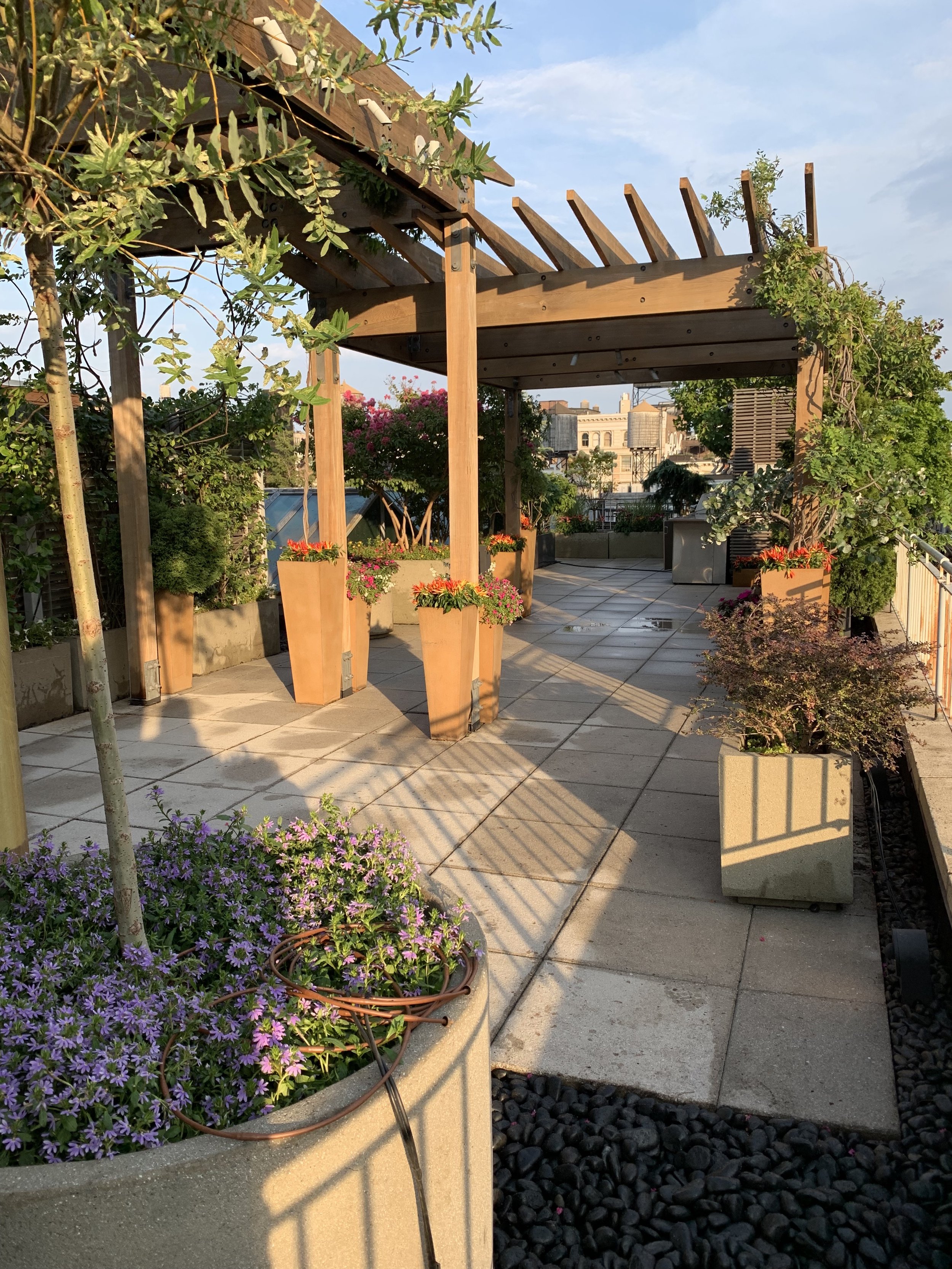
Most of the rooftops we design don't choose one or the other. A central artificial grass zone for lounging, kids, or a dog handles the "usable surface" problem, while surrounding containers with the trees, shrubs, and perennials covered in the best plants for NYC rooftop gardens supply the greenery, privacy, and seasonal interest that turf alone can't provide. It's the combination that tends to make everyone happy.
Find Out If It's Right for Your Space
We install artificial grass as part of full rooftop and terrace design projects across Manhattan and Brooklyn. Get in touch and we'd be glad to take a look at your space.