How Drip Irrigation Works in a NYC Rooftop or Terrace Garden
/Quick Answer: Drip irrigation delivers water directly to each container through a network of tubing and small emitters, controlled by an automatic timer connected to a water source. It uses far less water than hand-watering or sprinklers, and it's essential for any NYC rooftop or terrace with more than a handful of pots, since containers dry out fast in wind and heat, and a missed watering can kill a plant within days.
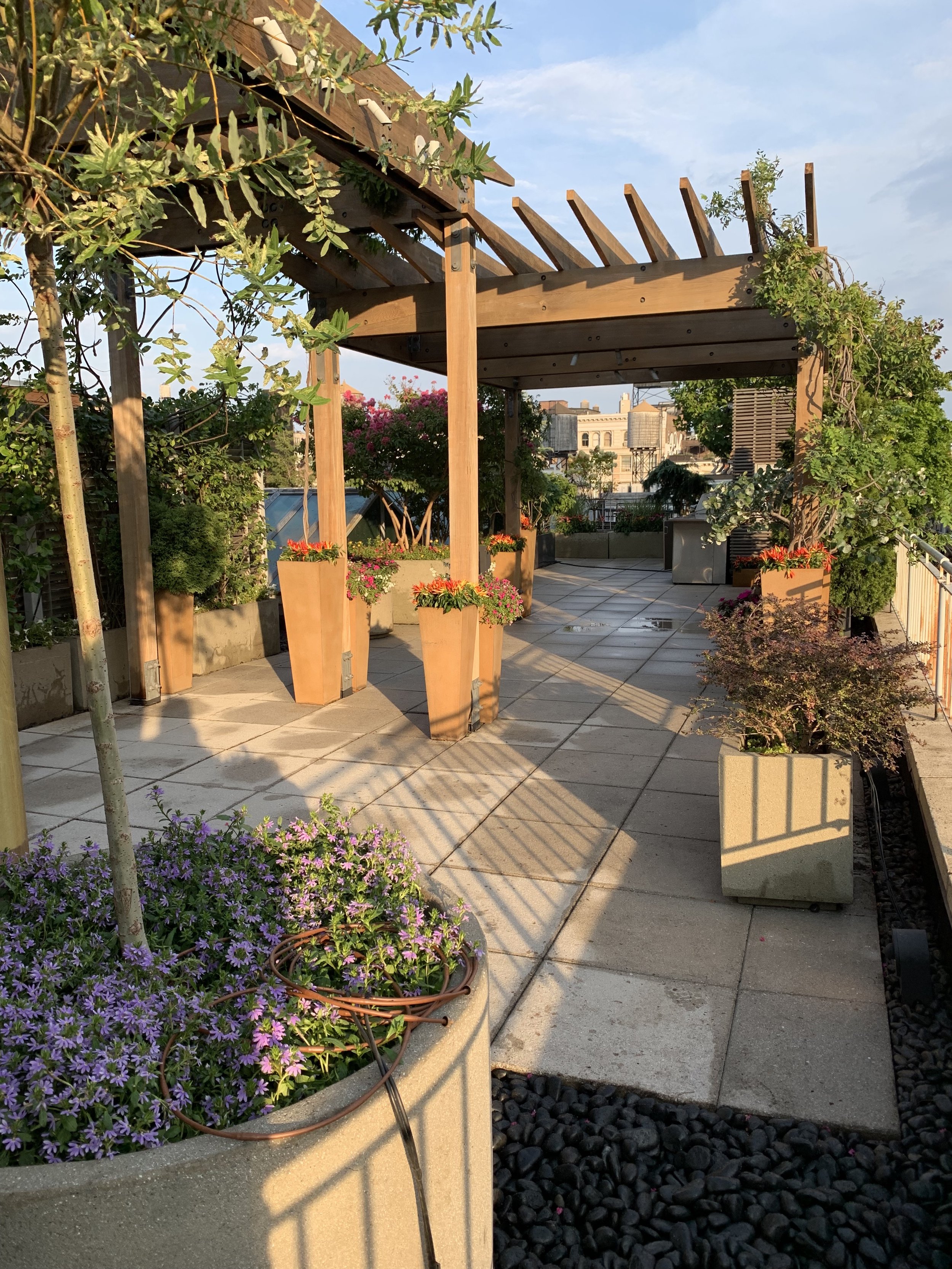
We've said it before on this blog: hand-watering 50 containers on a rooftop isn't realistic, and missed waterings kill plants fast in summer wind. That's not an exaggeration for effect, it's the single most common reason a beautifully designed rooftop garden looks great in June and struggling by August. Drip irrigation is how you take watering off the list of things that can go wrong.
Why Rooftop and Terrace Containers Dry Out So Fast
Container soil behaves nothing like ground soil. There's a limited volume of it, it's surrounded on all sides by air instead of insulating earth, and on a rooftop, it's exposed to wind speeds that can be double what you'd find at street level.
Add reflected heat off a black membrane roof or glass facade, and a container that would stay moist for days in a backyard can dry out in a single hot, windy afternoon. Multiply that across dozens of containers on a real rooftop installation, and hand-watering stops being a maintenance task and becomes a full-time job nobody has time for.
How a Drip System Actually Works
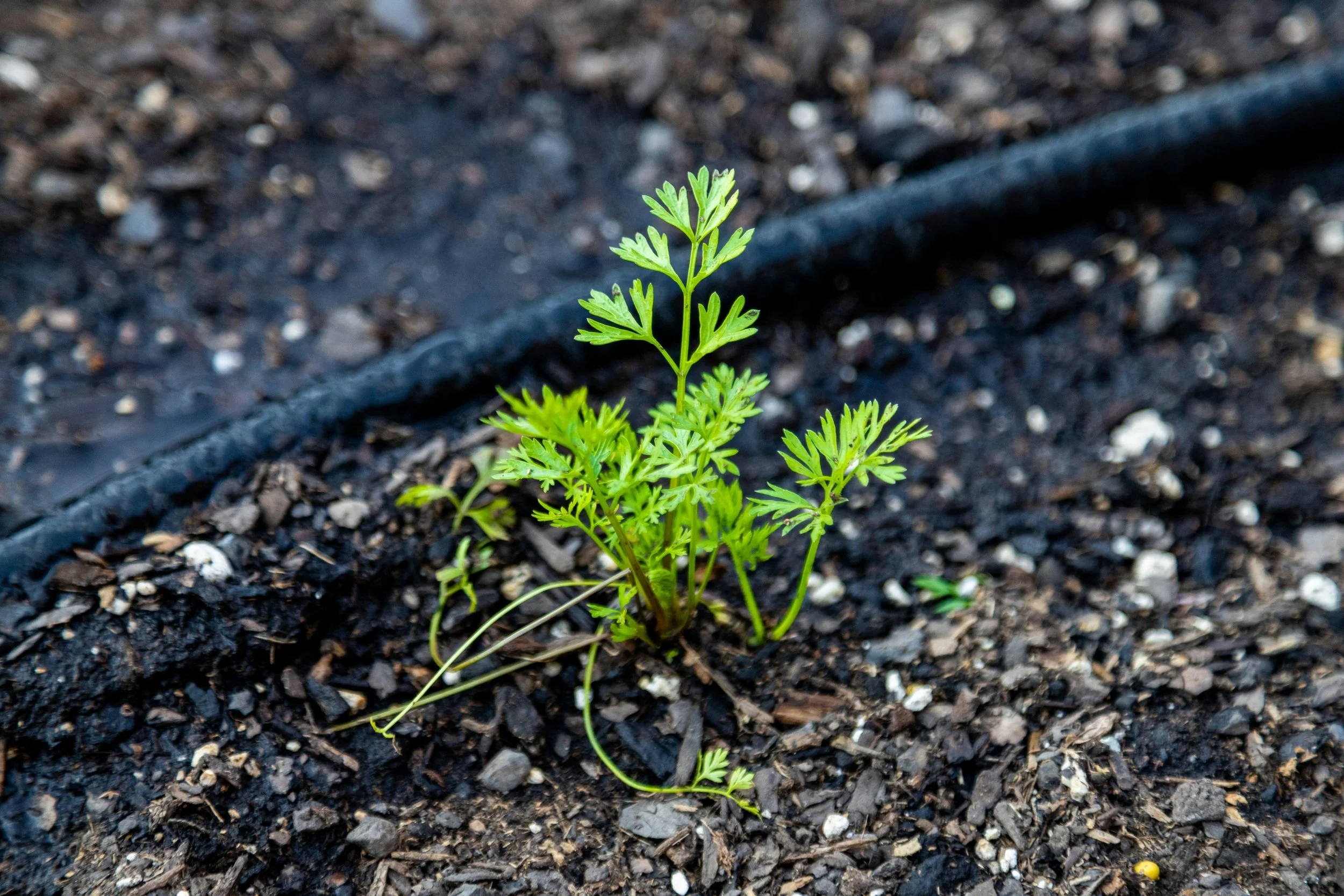
At its core, a drip system is simple: a water source feeds a mainline of tubing that runs to each planting area, and small emitters, either individual drippers at each container or inline emitters along the tubing, release water slowly and directly at the root zone.
A pressure regulator keeps the flow consistent regardless of your building's water pressure, and a filter prevents the small emitter openings from clogging with sediment. The whole system is run by a timer or controller that turns it on and off automatically, so watering happens on a schedule whether or not anyone's on-site that day.
Getting Water to the Roof in the First Place
This is the part that's genuinely specific to NYC buildings, and it's usually the first thing we sort out before designing the rest of the system. Some buildings already have a rooftop water spigot installed for maintenance or HVAC use, which makes tying in straightforward. Others require running a line up from an interior hose bib or tying into the building's water supply with the help of a plumber, which means coordinating with building management or, in a co-op or condo, getting board approval before any work begins. It's worth having this conversation early in the process, since it affects both the timeline and the system design more than almost anything else.
Timers and Smart Controllers
Modern drip systems typically run on WiFi-enabled controllers that let you adjust watering schedules remotely, which matters if you travel or split time between homes. Most controllers also let you build in seasonal adjustments, more frequent, shorter cycles during a July heat wave, less in cooler spring and fall weeks, without physically reprogramming anything on-site.
For terraces that get some rain exposure, a rain-skip feature can pause the schedule after real rainfall, though on covered or wind-sheltered terraces this matters less than it would on an exposed rooftop.
Winterizing the System
NYC winters mean freezing temperatures, and water left in exposed tubing or a backflow preventer will freeze and can crack fittings or split lines. Before the first hard freeze, typically by late November, the system needs to be shut off, drained, and in most cases blown out with compressed air to clear any remaining water from the lines.
This is a step that's easy to forget in the fall rush and expensive to skip, a cracked line often isn't discovered until you try to turn the system back on the following spring and find a leak instead of a working irrigation system.
What Reliable Irrigation Opens Up for Plant Selection
A rooftop or terrace without irrigation more or less limits you to the most drought-tolerant plants available, since anything else is gambling on someone remembering to water consistently. Once drip irrigation is in place, the plant palette opens up considerably, you're no longer designing exclusively around survival, you're designing around what actually looks good.
We cover plant options at both ends of that spectrum in the best plants for NYC rooftop gardens and low-maintenance plants for Manhattan terraces, and irrigation is the thread that connects both lists to real-world success.
Cost and Building Approval Considerations
System cost depends heavily on the size of the space, how many planting zones need separate control, and how involved the water tie-in ends up being. For co-op and condo buildings specifically, factor in time for board approval and any required documentation before installation can begin, this is often the longest part of the timeline, not the physical installation itself. We touch on rooftop project costs more broadly in how much does a rooftop garden cost in NYC.
Let Us Design Your Irrigation System
We design and install drip irrigation systems as part of full rooftop and terrace design projects across Manhattan and Brooklyn, including the water access and building coordination that often trips up a DIY approach. Get in touch and we'd be glad to take a look at your space!