The Case for Hardscaping in Small NYC Outdoor Spaces
/In New York City, outdoor space is precious. A 200-square-foot terrace isn't just a perk — it's a lifestyle upgrade. But too often, small outdoor spaces in the city get underutilized: a couple of plastic chairs, a potted plant that doesn't survive August, and a lot of wasted potential.
The secret to transforming a compact rooftop or terrace? Hardscaping.
Hardscaping — the non-plant elements of a landscape design, including pavers, decking, built-in seating, retaining walls, pergolas, and outdoor kitchens — is often what separates a beautiful, functional outdoor room from a forgotten concrete slab. And in small spaces, good hardscaping doesn't just look great. It makes the space work harder.
What Is Hardscaping, Exactly?
Hardscaping refers to the hard, structural elements of an outdoor space. If softscaping is everything that grows (plants, grass, trees, soil), hardscaping is everything that doesn't:
Decking and pavers — wood, composite, porcelain, or stone surfaces underfoot
Built-in seating and planters — permanent structures that define the layout
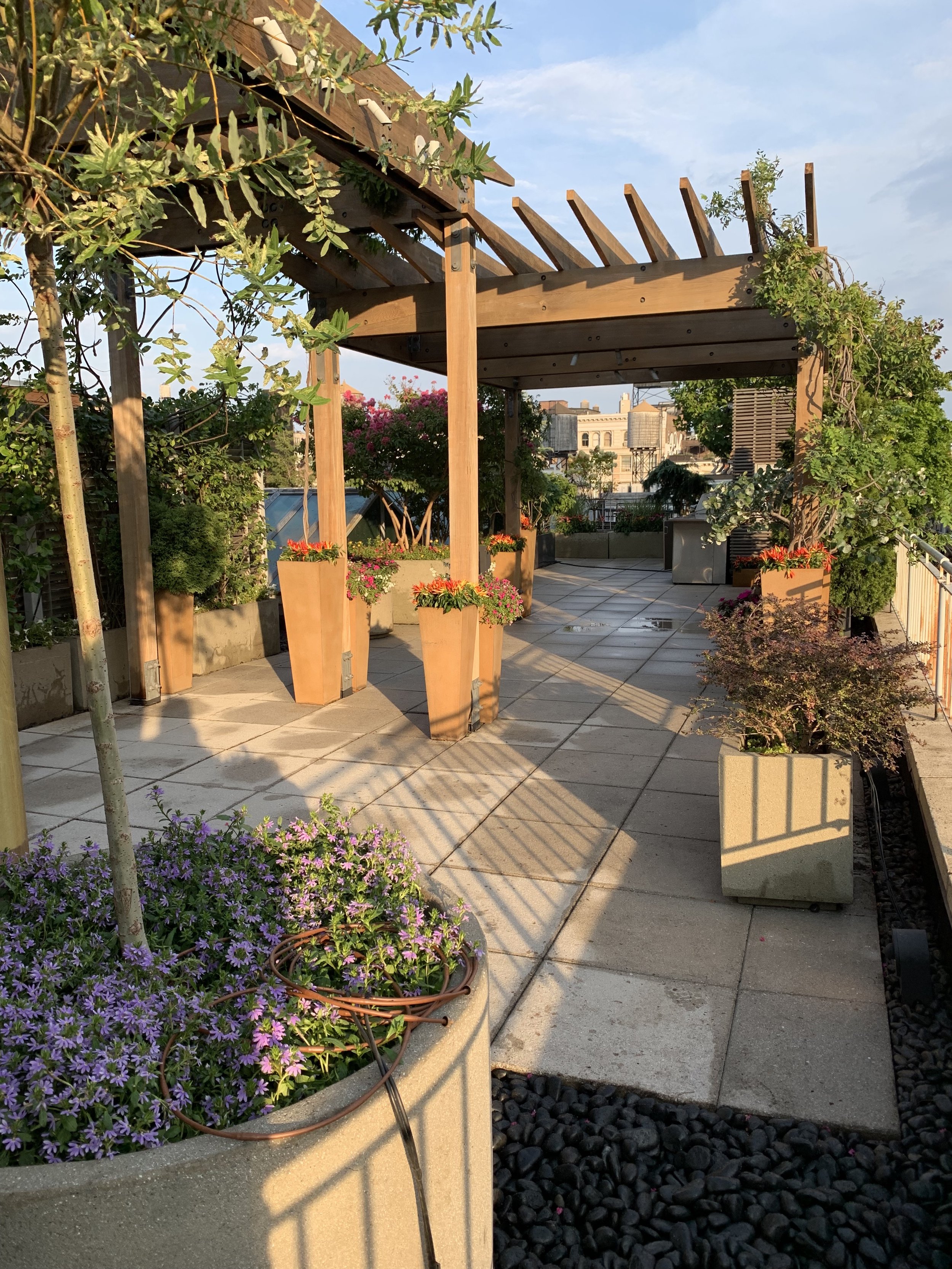
Pergolas and shade structures — overhead elements that create enclosure and comfort
Walls and screens — privacy panels, green walls, and wind barriers
Lighting and irrigation infrastructure — the systems that make it all function year-round
Outdoor kitchens and grills — for spaces designed around entertaining
In a small NYC outdoor space, hardscaping elements do double duty: they create the structure that makes a space feel intentional, while also solving practical problems like wind, privacy, drainage, and limited square footage.
Why Hardscaping Is Especially Valuable in Small Spaces
When you're working with 150 to 400 square feet — which describes a huge number of NYC terraces and rooftop spaces — every inch counts. Hardscaping is one of the most effective tools for making a small space feel larger, more organized, and more livable.
1. It Creates Defined Zones
One of the biggest mistakes in small outdoor spaces is treating them as a single undifferentiated area. A well-designed hardscape creates distinct zones — a dining area, a lounge area, a planted border — which makes even a compact terrace feel like it has depth and purpose.
Built-in L-shaped benches with storage underneath, for example, can anchor a seating zone while eliminating the need for bulky standalone furniture. Raised planter beds along a perimeter wall define the garden zone without eating into walking or sitting space.
2. It Reduces Maintenance
Planted surfaces are beautiful but demanding — especially in NYC's extreme seasonal swings. Hardscaped surfaces like porcelain pavers or composite decking require minimal upkeep and hold up through harsh winters and scorching summers without the replanting cycles that soft landscaping demands.
For busy homeowners and building managers, a hardscape-forward design isn't just aesthetic — it's practical.
3. It Adds Real Value
Outdoor living space in New York City is a premium. A professionally designed and built outdoor space — with quality decking, built-in features, and thoughtful layout — can meaningfully increase property value and appeal. According to real estate professionals, well-designed outdoor spaces in NYC can add significant value to a listing, often recouping a strong percentage of the investment.
4. It Solves Structural and Safety Constraints
On rooftops especially, hardscaping elements are often the solution to structural constraints. Lightweight composite decking, for instance, can cover uneven or unattractive rooftop surfaces while keeping load weight low. Built-in planters can be engineered to specific weight limits. Pergolas and shade sails provide wind protection without adding heavy permanent structures.
Good hardscape design works with the building — not against it.
Popular Hardscaping Elements for NYC Rooftops and Terraces
Porcelain Pavers
One of the most popular choices for NYC elevated spaces right now. Porcelain pavers are lightweight, frost-resistant, low-maintenance, and available in a wide range of finishes — including wood-look and stone-look options that are almost indistinguishable from the real thing. They're also slip-resistant when wet, which matters on exposed rooftops.
Composite Decking
Composite decking has largely replaced traditional wood on NYC terraces and rooftops. It doesn't warp, splinter, or require annual staining, and modern composites come in rich, realistic wood tones. For small spaces, the continuity of a deck surface (versus a mix of materials) makes the area feel larger and more cohesive.
Built-In Planter Beds
Perimeter planter beds are a hardscape staple on NYC terraces. By building planters into the edges of a space rather than scattering containers, you free up the center of the terrace for living and keep the design looking clean and intentional. Raised beds also allow for deeper soil profiles, which opens up planting options significantly.
Pergolas and Overhead Structures
A pergola transforms a flat, exposed terrace into an outdoor room. Even a simple freestanding structure with a shade sail or climbing plants creates a sense of enclosure that makes a small space feel more intimate and protected. In NYC, pergolas also help with wind mitigation — a critical concern on elevated spaces.
Privacy Screens and Green Walls
In a dense city, privacy is a luxury. Slatted wood or metal screens, frosted glass panels, and living green walls are all popular ways to create visual separation from neighboring buildings without closing off light or air entirely. Green walls in particular add a dramatic softscape element while functioning as a structural hardscape feature.
Hardscaping + Softscaping: The Best Results Come from Both
A common misconception is that hardscaping and planting are somehow at odds — that more structure means less green. In our experience, the opposite is true. The best outdoor spaces in New York City use hardscaping as the backbone and softscaping as the personality.
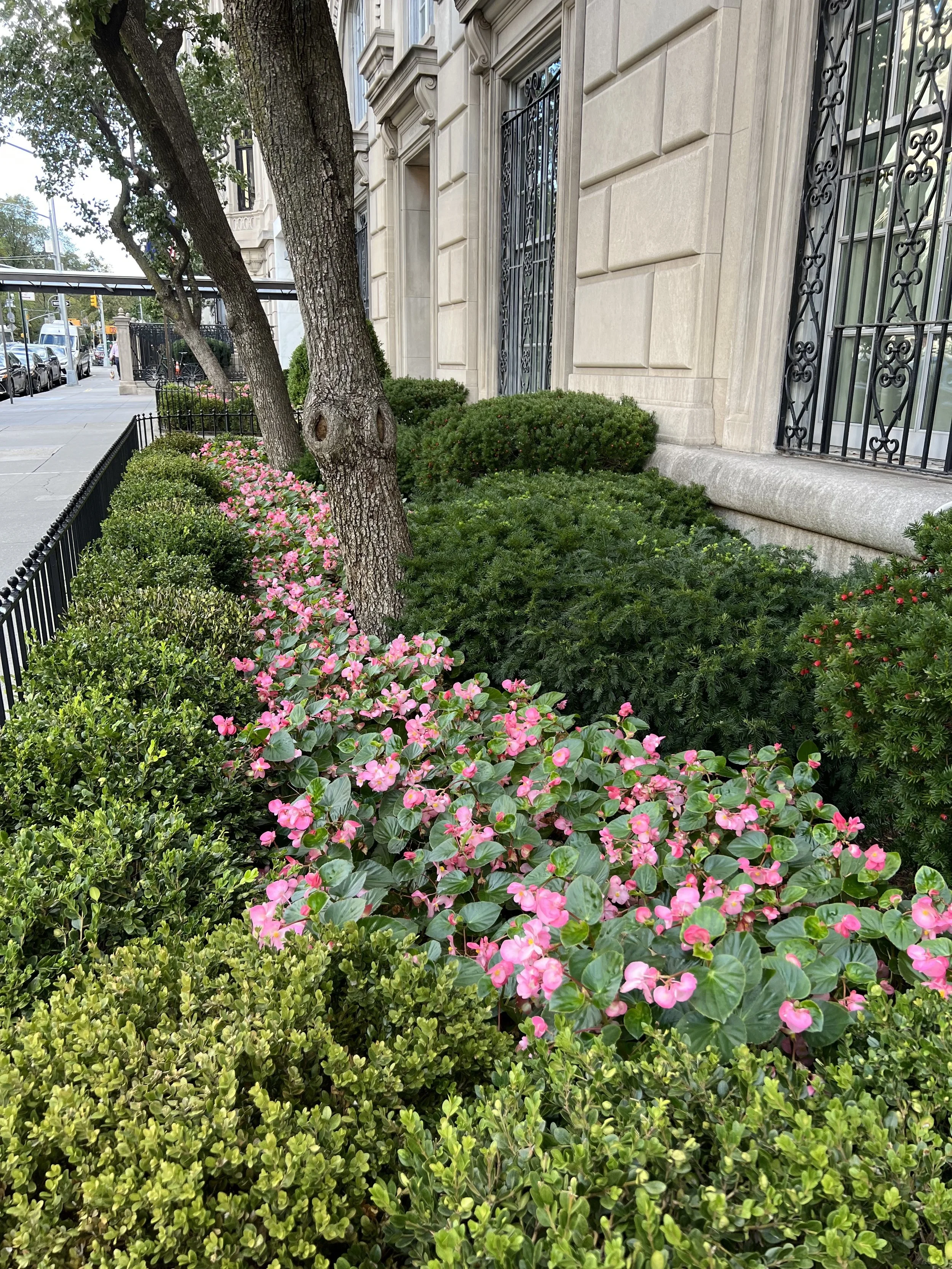
A beautifully laid porcelain paver terrace with thoughtful built-in planters and well-chosen perennials is far more compelling than an all-paved space or a collection of random containers. Structure gives plants context. Plants give structure warmth.
Getting Started with Hardscaping in NYC
Hardscaping projects on rooftops and terraces in New York City typically require coordination with your building's management, a structural assessment, and in some cases, permits. Working with an experienced urban landscaping firm from the start ensures that your design is not only beautiful but buildable.
At NY Horticulture, we handle the full process — from initial structural review and design through material selection, installation, and planting. If you've been staring at an underused outdoor space and wondering what it could be, we'd love to show you.