Rooftop Garden vs. Terrace Garden: What's the Difference?
/If you've ever stood on a high-floor outdoor space in New York City and wondered exactly what you're looking at — a rooftop garden? A terrace garden? — you're not alone. The two terms are often used interchangeably, but they're actually quite different in structure, design approach, and what's possible for planting. Understanding that difference is the first step to making the most of your elevated outdoor space.
Whether you're planning a new build or thinking about transforming an existing space, here's what you need to know.
What Is a Rooftop Garden?
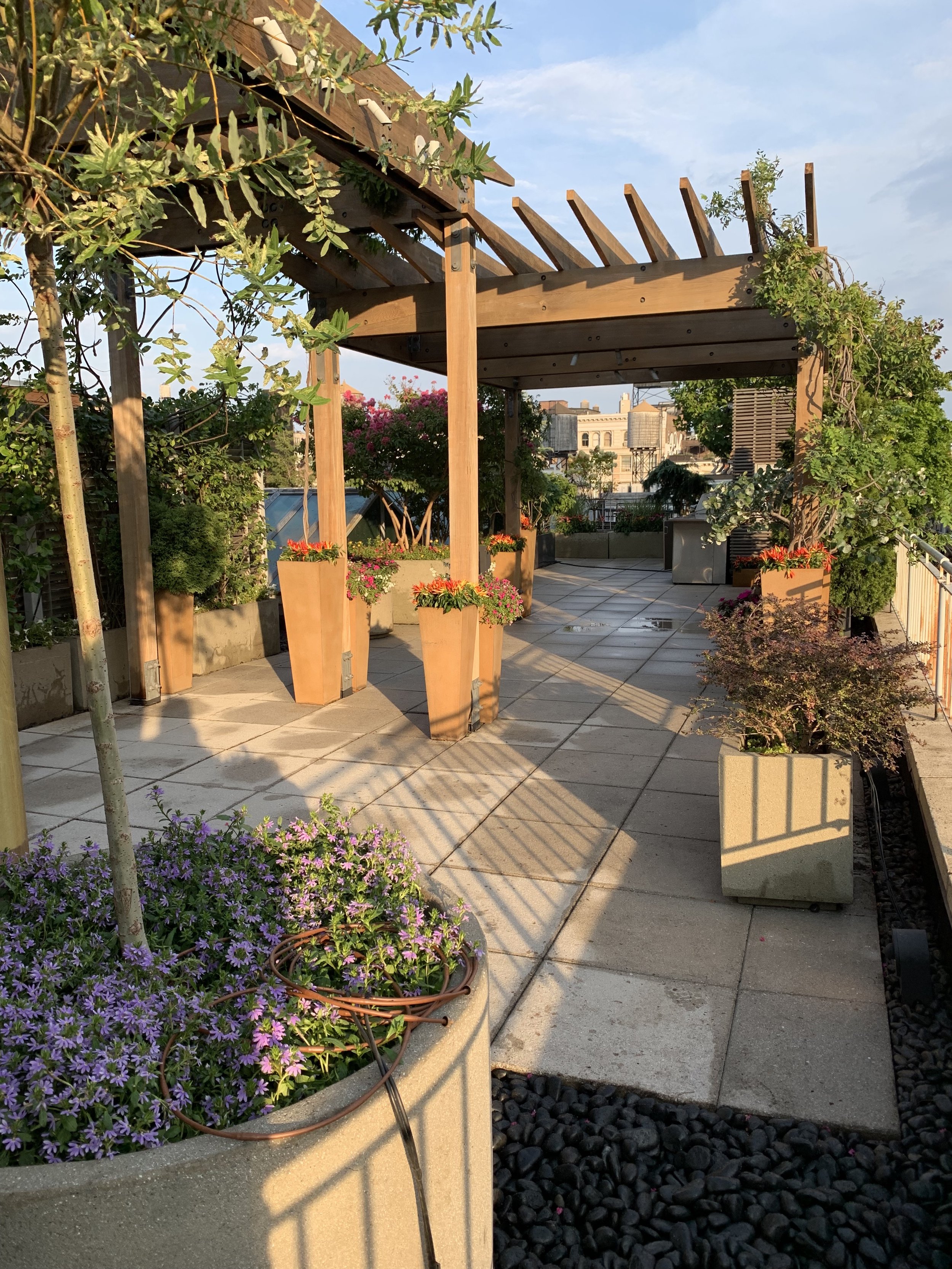
A rooftop garden sits on the actual roof of a building — usually a flat or low-slope surface that was not originally designed as a usable outdoor space. In New York City, rooftop gardens have exploded in popularity over the past decade as homeowners and building owners look to reclaim unused square footage.
Because rooftops are structural additions, they come with unique challenges:
Load-bearing capacity is the first concern. Soil, planters, furniture, and people all add weight. A structural engineer assessment is often required before any planting begins.
Wind exposure is significantly higher on open rooftops, which affects plant selection and the need for windbreaks or privacy screening.
Waterproofing and drainage must be addressed carefully to protect the building below.
Access is often through a bulkhead door or hatch, which limits how materials and large planters can be moved in.
Despite these challenges, rooftop gardens offer something rare in NYC: full sun exposure, 360-degree views, and a true sense of open sky.
What Is a Terrace Garden?
A terrace garden, by contrast, is an outdoor space that's integrated into the building's structure — typically as an extension of a specific floor or unit. Think of the setback terraces common in pre-war buildings, the wraparound terraces of a penthouse, or an outdoor deck off a condo unit.
Terraces are built-in and designed from the start to support outdoor use, which means:
Load-bearing is already accounted for in the building's design.
Access is direct through interior doors, making it far easier to furnish and plant.
Exposure varies — terraces can be fully exposed, partially sheltered by the building above, or flanked by neighboring units.
Privacy is often more of a natural feature, since terraces are typically positioned between building floors or set back from outer edges.
Terrace gardens can range from a small 150-square-foot setback to a sprawling 2,000+ sq ft penthouse oasis. Because of their integrated structure, they tend to offer more flexibility for larger installations like in-ground planter beds, irrigation systems, and permanent structures like pergolas or hardscape.
Key Differences at a Glance
Location
Rooftop Garden: Top of building, open roof
Terrace Garden: Floor-level extension, integrated into structure
Structural Planning
Rooftop Garden: Often requires engineering review
Terrace Garden: Usually pre-designed for outdoor use
Wind Exposure
Rooftop Garden: High — full exposure
Terrace Garden: Varies — often partially sheltered
Access
Rooftop Garden: Hatch or bulkhead
Terrace Garden: Direct interior door access
Privacy
Rooftop Garden: Typically open and exposed
Terrace Garden: Often more naturally private
Irrigation
Rooftop Garden: Requires custom planning
Terrace Garden: Easier to integrate
Planting Depth
Rooftop Garden: Limited by load capacity
Terrace Garden: Greater flexibility
Which Is Better for Gardening in NYC?
There's no universal answer — it depends entirely on your goals, space, and building.
Rooftop gardens are ideal if you want maximum sun, panoramic views, and the wow factor of a true elevated landscape. They're also great for green roof installations, edible gardens, and native plant meadows. The tradeoffs are cost and complexity.
Terrace gardens tend to be more approachable for intensive planting and design. With easier access and pre-designed structural capacity, you can go further with raised beds, specimen trees, built-in seating, and irrigation without the added layer of engineering.
That said, the best gardens we've seen in NYC are the ones designed around the specific character of the space — not just a label.
What Both Have in Common
Whether you're working with a rooftop or a terrace, there are a few universal truths about elevated urban gardening in New York:
Container selection matters. Lightweight, frost-resistant containers are essential for any elevated space.
Wind can be the #1 killer. Even terrace gardens can experience wind funneling between buildings. Plant selection and windbreak design are critical.
Irrigation saves plants. Elevated spaces dry out faster than ground-level gardens. A drip irrigation system isn't a luxury — it's a long-term investment.
Summer heat is intense. June through August on a rooftop or terrace can be brutal. Choosing heat-tolerant plants and providing shade elements keeps your garden thriving all season.
If you’re ready to design your dream rooftop or terrace garden, contact NY Horticulture Group for a free consultation.