Best Low-Maintenance Plants for Manhattan Terraces
/Quick Answer: The most reliable low-maintenance plants for a Manhattan terrace are slow-growing evergreens like boxwood, inkberry holly, and mugo pine for year-round structure, paired with drought-tolerant perennials like sedum, Russian sage, and catmint, and self-supporting ornamental grasses like feather reed grass. All of them tolerate inconsistent watering, need minimal pruning, and hold up to wind and reflected heat without constant intervention.
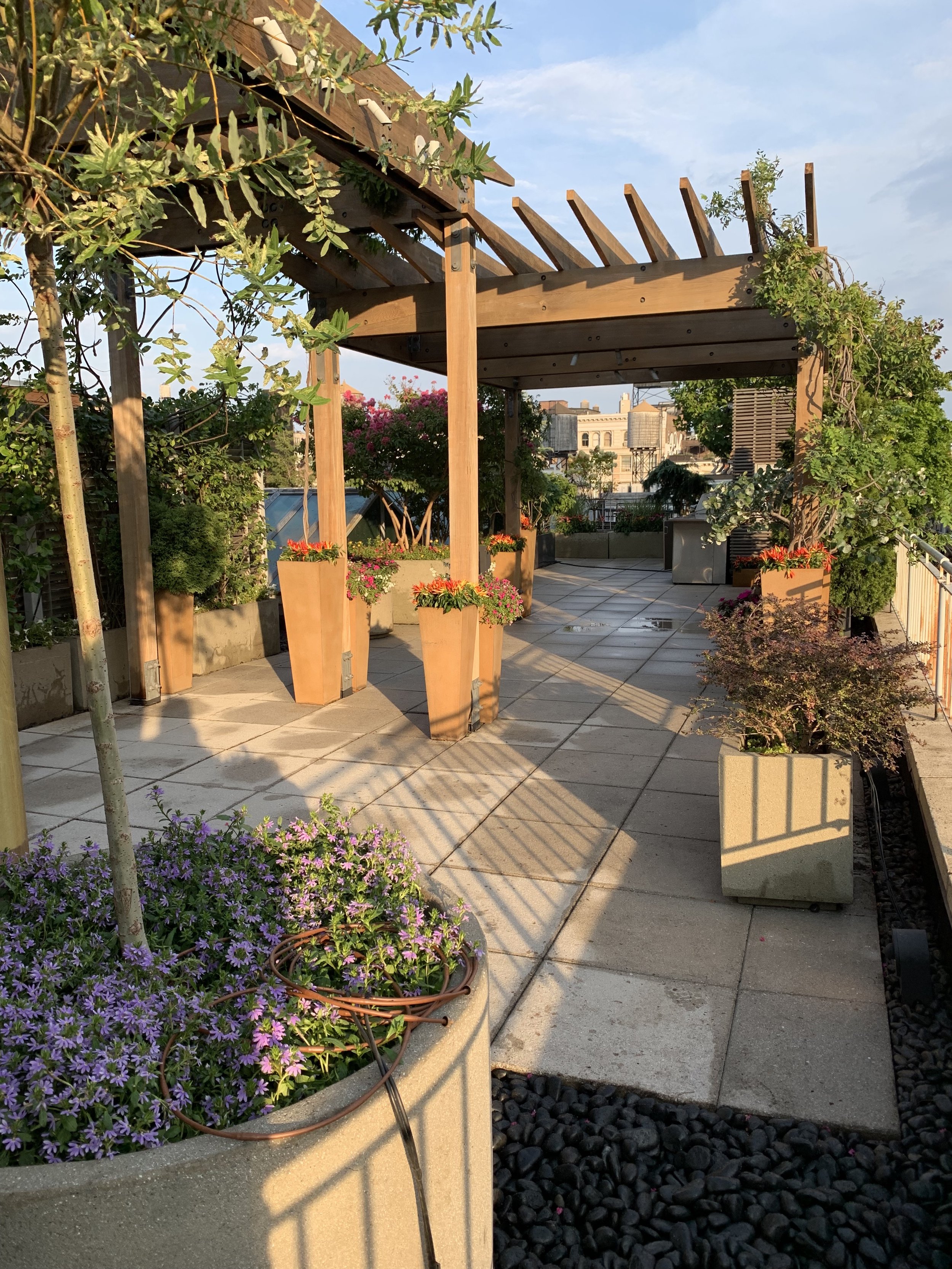
Not every terrace owner wants a hobby. Plenty of our clients want a terrace that looks good from the dinner table and the street below, without a weekly list of chores attached to it. That's a completely reasonable goal, and it's achievable, as long as the plant selection matches how the space will actually be used and watered.
What "Low-Maintenance" Actually Means on a Terrace
A genuinely low-maintenance terrace plant checks a few specific boxes: it tolerates a missed watering or two without dropping leaves, it doesn't need regular deadheading to keep blooming, it grows slowly enough that you're not pruning it back every few weeks, and it's naturally resistant to the pests and diseases that show up in container culture. Terraces sit a step below full rooftop exposure, often sheltered somewhat by surrounding buildings, but they still deal with reflected heat off brick and glass facades, wind funneling between buildings, and the same container-life stress every NYC outdoor space contends with. The plants below are the ones we come back to again and again for clients who want real results with minimal ongoing effort.
Structural Evergreens for Year-Round Backbone
Evergreens do the heavy lifting on a low-maintenance terrace, since they provide structure in every season without needing to be replanted or heavily cut back.
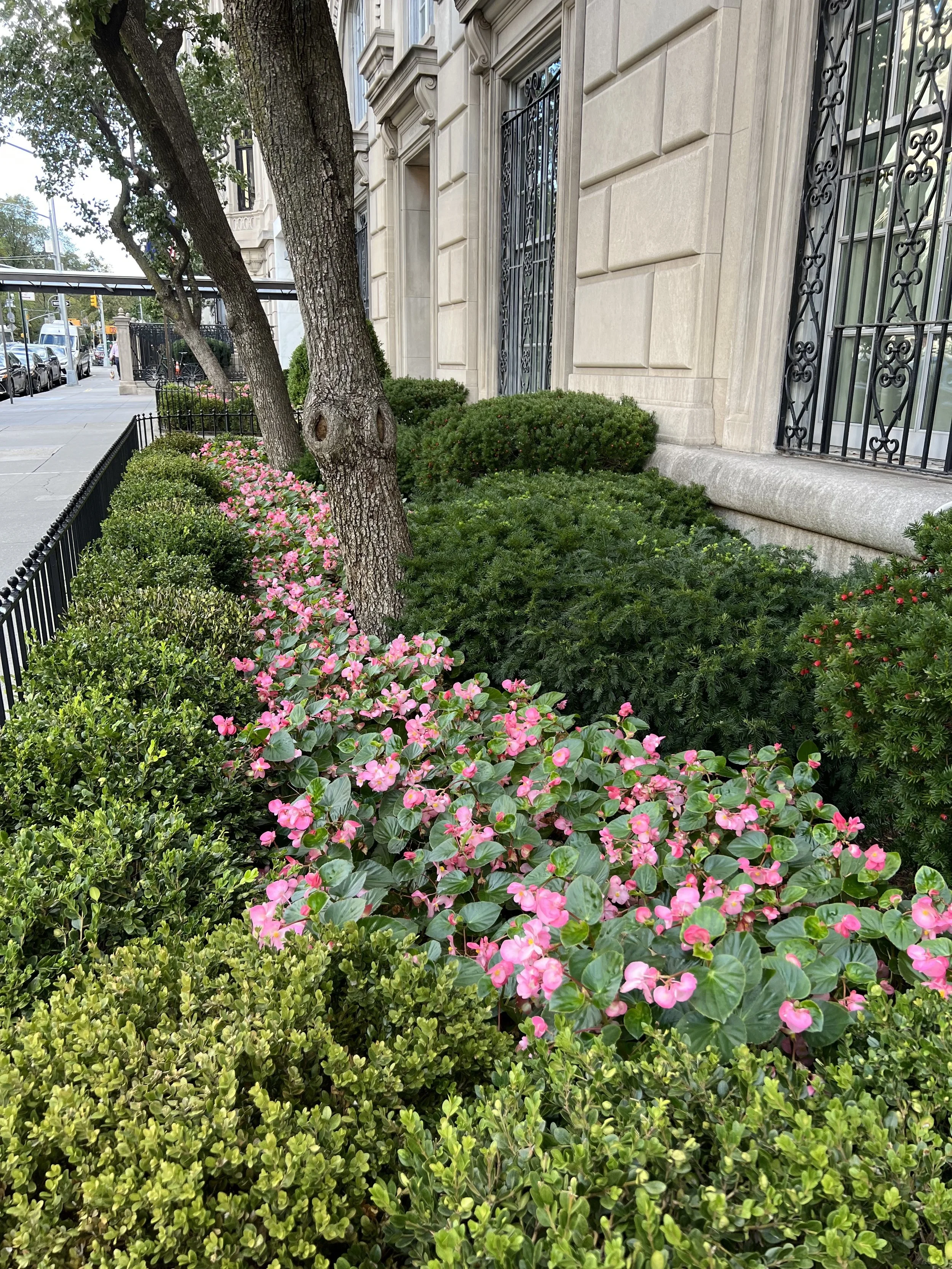
Boxwood ('Green Mountain' or 'Winter Gem' for cold hardiness) gives you that classic formal look with almost no ongoing demands beyond an annual light shaping if you want one.
Inkberry holly ('Shamrock' or 'Densa') is a native alternative that tolerates wind, cold, and inconsistent soil without complaint, and keeps a tidy mounded shape on its own.
Mugo pine ('Slowmound' specifically, for the most compact habit) adds evergreen texture and genuinely does not need pruning to stay in bounds for years.
Perennials That Thrive on Neglect
A handful of perennials are, frankly, harder to kill than to keep alive.
Sedum 'Autumn Joy' is about as drought-proof as flowering plants get, with pink summer blooms that age into a coppery rust through fall, and it asks for nothing beyond decent drainage.
Russian sage thrives in full sun and wind that would stress out more delicate plants, producing silvery foliage and lavender-blue flowers all summer with zero deadheading required.
Catmint 'Walker's Low' blooms for months and, if you do want to put in five minutes of effort, rewards a single post-bloom trim with a second flush.
Yarrow rounds out the list, tolerating poor soil and drought better than almost anything else on a terrace.
Grasses That Take Care of Themselves
Ornamental grasses move with the wind instead of fighting it, which makes them a natural fit for terrace conditions, and most need only a single cutback in early spring for the entire year's maintenance.
Feather reed grass 'Karl Foerster' stays upright through wind that would flop other grasses, blooms in early summer, and holds attractive golden seed heads well into winter.
Switchgrass 'Northwind' is similarly wind-stable and adds strong vertical structure without spreading aggressively in a container.
Blue fescue works at the front of a planting for smaller-scale texture and stays evergreen through mild winters.
A Note on Manhattan's Microclimates
"Manhattan terrace" covers a lot of ground. A Tribeca terrace tucked between taller buildings often gets meaningful wind shelter and can support a slightly wider plant palette.
A high-floor Midtown or Financial District terrace catching wind off three sides needs to lean harder into the toughest plants on this list, and containers need to be heavier or anchored.
A brownstone garden terrace on the Upper West Side behaves more like a shaded courtyard than an exposed rooftop, opening up options like boxwood and inkberry that prefer a bit of shelter. The right plant list for your terrace depends on which of these conditions you're actually working with, which is exactly the kind of thing worth a site visit before finalizing a planting plan.
The One Thing That Makes "Low-Maintenance" Actually Work
Even the toughest plant on this list will struggle if it's relying entirely on someone remembering to water it. Consistent irrigation is what turns a "drought-tolerant" plant into a genuinely no-fuss one, since it removes the single biggest point of failure in container gardening. We cover exactly how this works for NYC outdoor spaces in how drip irrigation works in a NYC rooftop or terrace garden, and it's the single upgrade we recommend most often to clients who want their low-maintenance plant list to actually live up to the name.
What to Skip If Low-Maintenance Is the Goal
A few popular choices work against the low-maintenance goal specifically: big-leaf hydrangeas need consistent moisture and frequent attention to bloom well in containers, most roses demand regular deadheading and disease management, and colorful annuals look great for a season but need full replanting every year. None of these are bad plants, they're just a different kind of project than what most low-maintenance terrace owners are after. For a broader look at rooftop-specific plant options beyond this terrace-focused list, see the best plants for NYC rooftop gardens, and for help deciding whether your space functions more like a terrace or a rooftop, rooftop garden vs. terrace garden breaks down the difference.
Let Us Design a Terrace That Takes Care of Itself
At NY Horticulture Group, we design and maintain terraces across Manhattan, matching the plant palette to your specific building, exposure, and how hands-on you actually want to be. If low-maintenance is the goal, we can also fold your terrace into an ongoing garden maintenance plan so the "low" stays low.
Get in touch and we'd be glad to take a look at your space!